

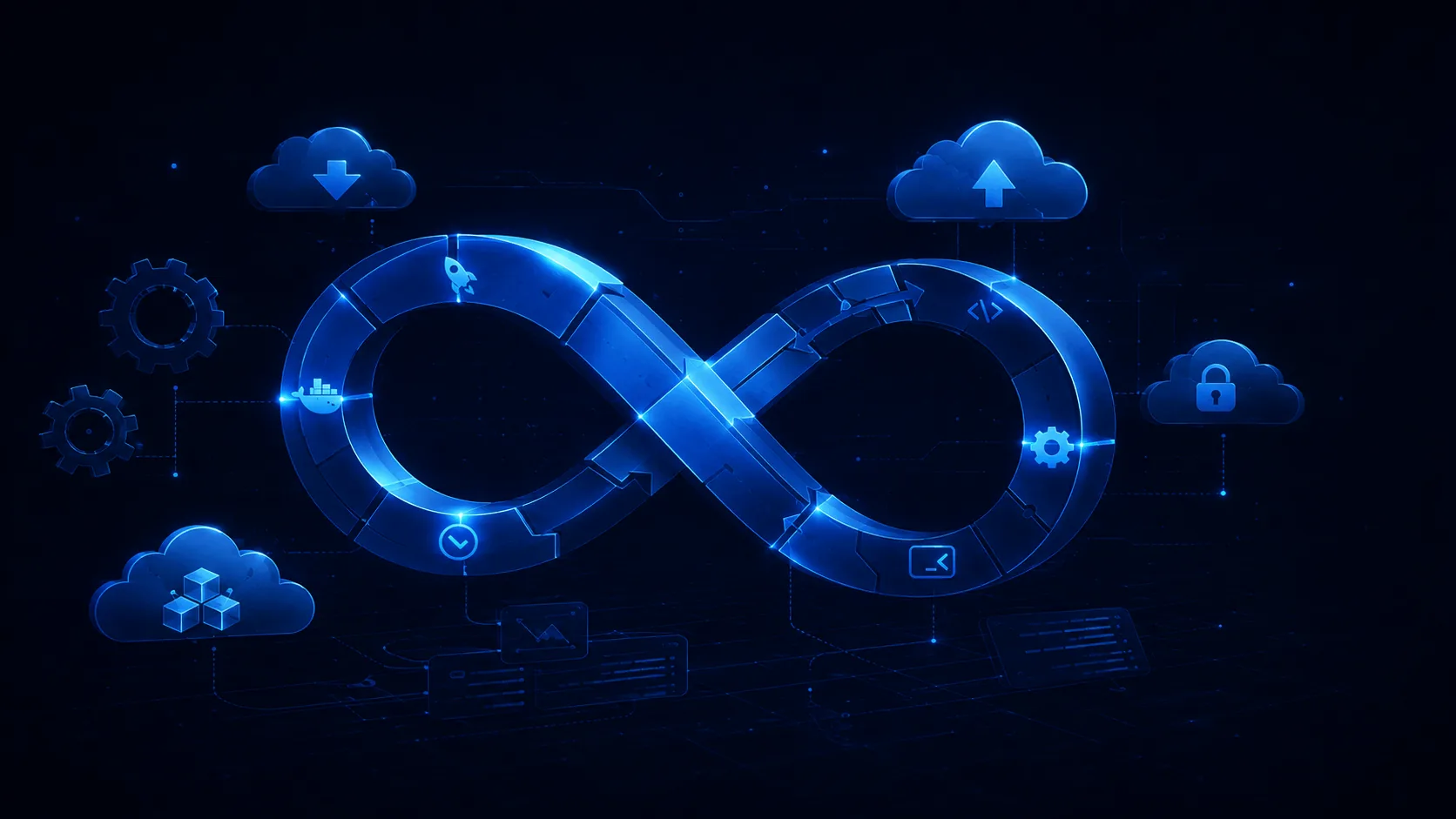
Cloud Implementation & DevOps
A migration that lifts servers into the cloud unchanged usually costs more to run and is no easier to operate. The value comes from what you change on the way — how deployments happen, how the system recovers, and who can safely make a change.
- Reply within one business day
- NDA on request
- No obligation
What this covers
Cloud migration
Moving existing systems onto AWS, Azure or Google Cloud incrementally, so the workload keeps running while responsibility shifts.
Containerisation and orchestration
Docker and Kubernetes where the workload justifies it — and honest advice about when a managed platform is the better answer.
Infrastructure as code
Terraform and Packer definitions, so environments are reproducible and a change is reviewable rather than performed by hand in a console.
CI/CD pipelines
Automated build, test and deployment with a rollback path, so releasing stops being an event that requires a quiet afternoon.
Observability
Logging, metrics, tracing and alerting configured so an incident is diagnosable from the data you already collect.
Cost engineering
Right-sizing, scaling policy and storage tiering. Cloud bills grow silently, and the cause is usually a handful of specific decisions.
From first conversation to running software
- 01
Assess what you run
Current architecture, dependencies, data volumes and the constraints — regulatory, contractual or operational — that shape the options.
- 02
Plan the increments
A sequence where each step is independently valuable and reversible, rather than one cutover with no way back.
- 03
Automate as you migrate
Infrastructure defined as code and deployment automated during the move, because retrofitting it afterwards rarely happens.
- 04
Hand over operations
Runbooks, alerting and access model documented, so your team can operate the platform without depending on us.
Tell us what you're running and what's hurting
Discuss cloud workPlatforms we've built
Projects from our portfolio. Each has its own write-up.
Trading
OptionTeller

An options analytics platform querying 70+ million daily trades, built on Next.js and Rust.
Fintech
SPARE

A fintech network turning retail points of sale into cash access points, built end to end.
Financial Media and Investment Education
RealVision

A cross-platform financial streaming service delivering expert analysis across web, mobile, iPad and TV.
- 40%
- Increase in user engagement through dynamic tools and content
- 200,000+
- Engaged members globally
- 4.5
- Average user satisfaction rating
What we build it with
Selected for what this kind of system needs, not a default toolkit.
Providers

AWS

Google Cloud

Azure
Orchestration
Kubernetes
Docker
Mesos
Automation
Terraform

Packer

Chef

Azure DevOps
Where this work tends to land
Each of these sectors shapes the work differently — the industry page covers the specifics.
Cloud & DevOps: common questions
01
Which cloud provider should we use?
For most workloads all three are capable, and the deciding factors are usually practical: what your team already knows, what your existing licensing makes cheaper, whether you need a specific managed service, and where you need data to physically reside. We would rather help you choose on those grounds than argue provider preferences.
02
Is lift-and-shift migration a bad idea?
Not always — it can be the right first step when a data centre contract is expiring and the deadline is real. But it should be understood as a first step. Moving servers unchanged typically costs more to run than the hardware it replaced, because cloud pricing rewards elasticity that a lifted workload does not use.
03
Do we need Kubernetes?
Frequently not. Kubernetes is genuinely good at running many services with varied scaling behaviour, and it carries real operational overhead in return. For a small number of services, a managed container platform or serverless functions will do the same job with a fraction of the maintenance. We will tell you which case you are in.
04
Can you help reduce a cloud bill that's grown out of control?
Yes, and it is common work. Runaway cost usually concentrates in a few specific places — oversized instances, storage that was never tiered, data transfer between regions, environments left running. Measuring where the money goes almost always precedes any architectural change.
05
What happens to our deployment process?
It should become boring. Automated build, test and deploy with a rollback path means releasing is a routine action rather than a scheduled event, and that shift does more for reliability than most infrastructure changes.
Tell us what you're running and what's hurting
Whether it's a migration, a deployment process that scares people, or a bill nobody can explain — describe it and we'll come back with an assessment.
- Reply within one business day
- NDA on request