Product Design & Discovery
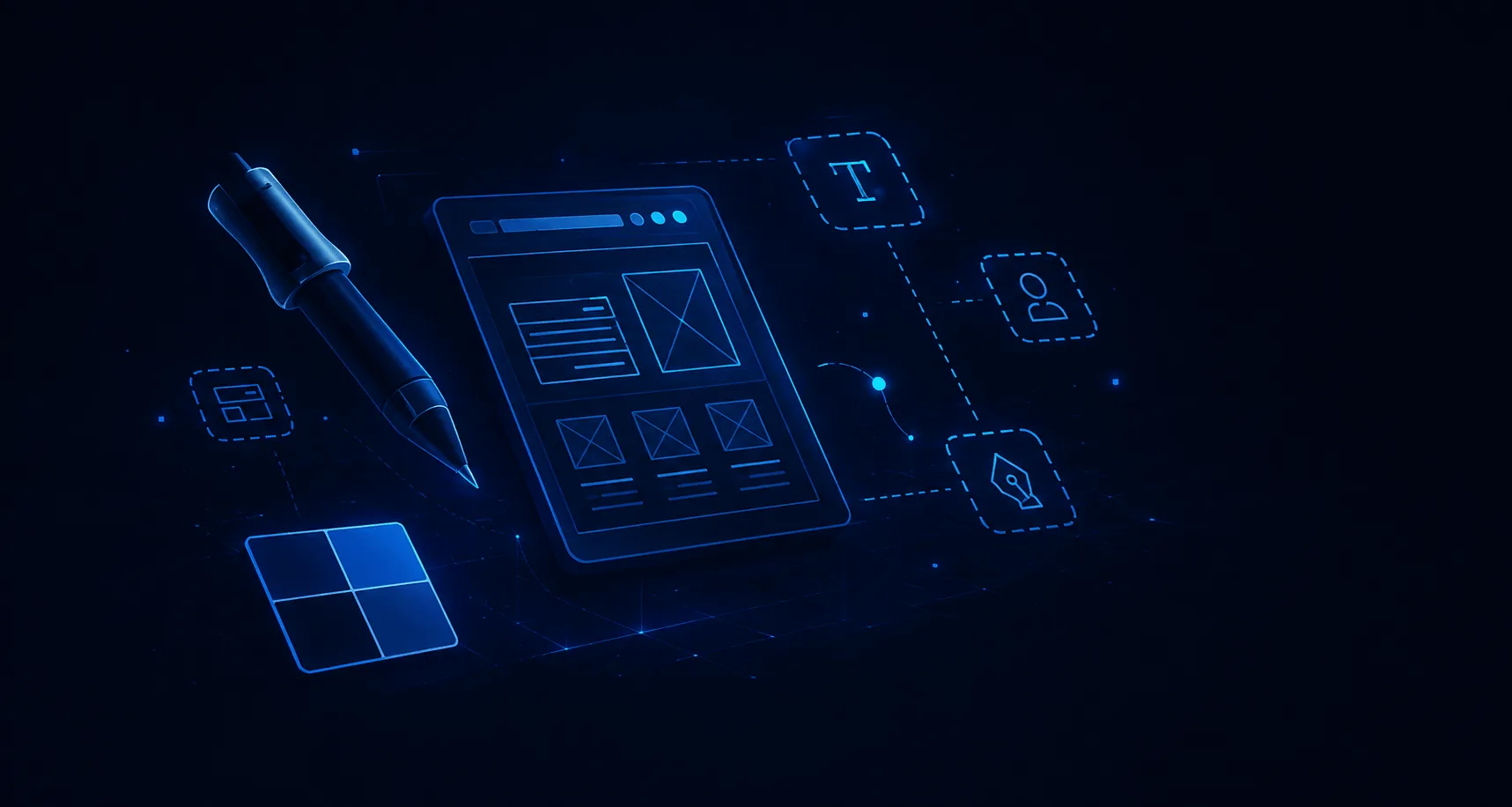
Design is cheapest place to be wrong. A prototype can be rebuilt in an afternoon; the same misunderstanding discovered after implementation costs a release — which is why discovery earns its keep before anyone opens an editor.
- Reply within one business day
- NDA on request
- No obligation
What this covers
Discovery
Establishing what the product actually has to do, for whom, and which assumptions are load-bearing enough to be worth testing first.
Interaction and UX design
Flows, states and edge cases — including the empty, loading and error conditions that decide how a product feels in real use.
Interface design
Visual design applied consistently across the product, built on a type scale and colour system rather than per-screen decisions.
Prototyping
Interactive prototypes at the fidelity the question demands — enough to answer it, not so much that it becomes a build in itself.
Design systems
Component libraries with defined states and tokens, handed over in a form engineers can implement without interpreting intent.
Accessibility in design
Contrast, focus order, target sizing and semantic structure decided at design time, where they cost nothing to get right.
From first conversation to running software
- 01
Frame the problem
What is being solved and for whom, and which questions are genuinely open versus already settled.
- 02
Explore broadly
Several structural approaches before refining one, because the first workable idea is rarely the best available.
- 03
Prototype and test
Putting an interactive version in front of people who resemble the actual users, at whatever fidelity answers the question.
- 04
Systematise for build
Turning validated designs into a component system with tokens and states, so implementation is assembly rather than interpretation.
Tell us what you're trying to figure out
Discuss design workPlatforms we've built
Projects from our portfolio. Each has its own write-up.
Healthcare — Fertility
Gunjan IVF World

A patient companion web app for an IVF clinic group — assessment, journey tracking and consultation booking.
Healthcare & Retail
Shapecrunch
A platform combining clinical appointment management with e-commerce for custom orthotic footwear.
HR Technology & Staffing
Crowdstaffing

A hiring platform managing the contingent-workforce pipeline for employers and staffing agencies alike.
What we build it with
Selected for what this kind of system needs, not a default toolkit.
Design

Figma

InVision
Adobe XD
Photoshop
Handoff
Design tokens
Component libraries
Interactive prototypes
Where this work tends to land
Each of these sectors shapes the work differently — the industry page covers the specifics.
Product Design & Discovery: common questions
01
Can we engage you for design without the build?
Yes. You own the output, and it is prepared to be implemented by whichever team takes it on — including yours or another vendor. Design that only works if we build it is not much of a deliverable.
02
How much discovery does a project actually need?
Proportional to how much is genuinely uncertain. A well-understood internal tool with a clear process behind it needs very little. A new product for an unfamiliar audience needs considerably more, because the expensive mistakes there are conceptual rather than technical.
03
What do we receive at the end?
Interactive prototypes, a component library with defined states, design tokens for colour, type and spacing, and specifications covering the responsive and edge-case behaviour that static screens cannot express.
04
Do you do user research?
We run usability testing on prototypes and structured interviews where the audience is reachable. Where it is not — some enterprise and specialist contexts — we are explicit about which decisions are therefore based on judgement rather than evidence, so the risk is visible rather than assumed away.
05
How do you hand designs over to engineers?
As a system rather than a set of screens: tokens, components with their states enumerated, and behavioural specs for the cases a static mockup cannot show. The measure of a good handover is how few clarifying questions implementation generates.
Engage or staff this
Tell us what you're trying to figure out
Whether it's a new product or an existing one that's become hard to use, describe the problem and we'll suggest what discovery would involve.
- Reply within one business day
- NDA on request