
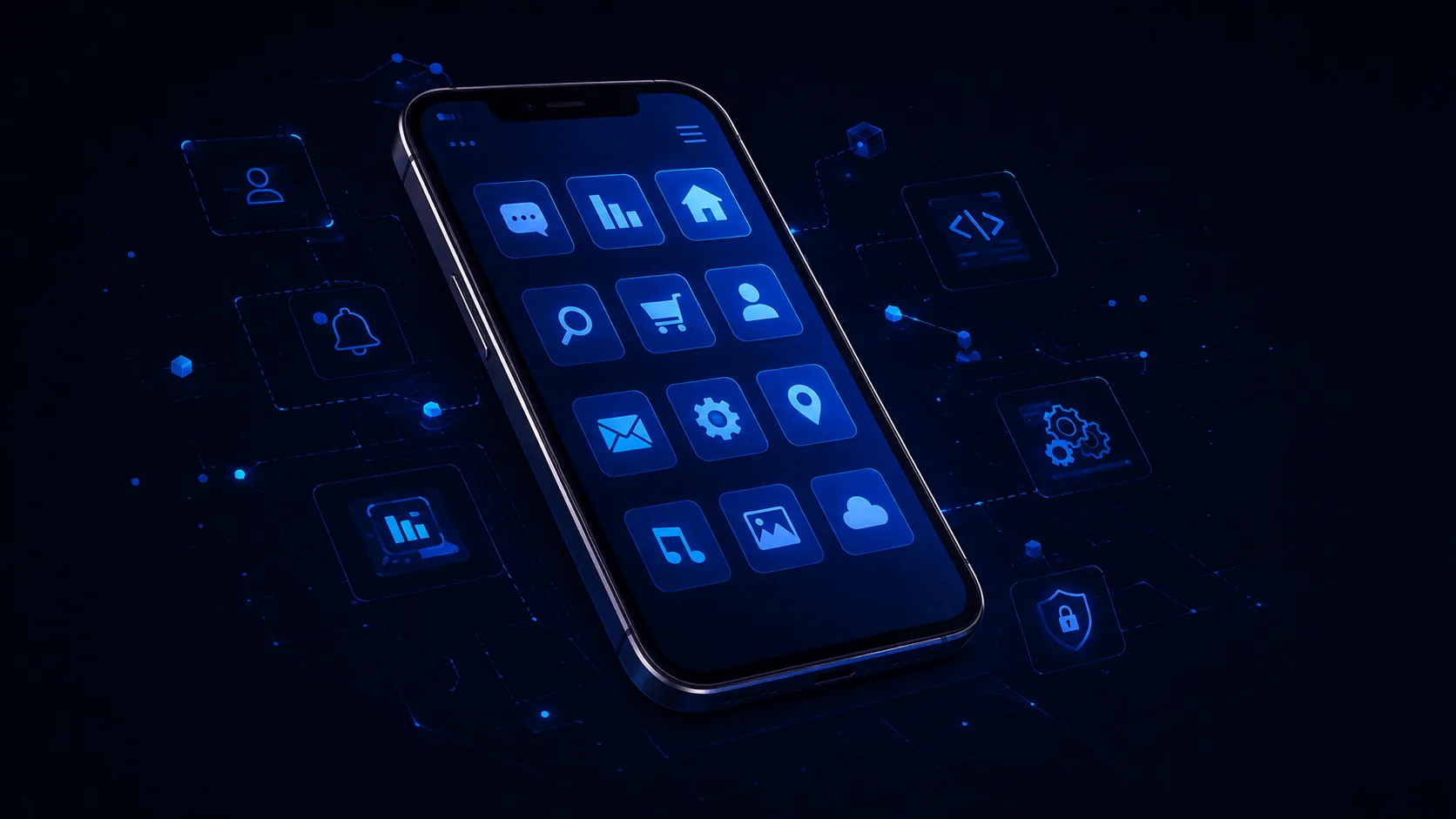
Mobile App Development
A mobile app is judged in the first ten seconds and abandoned silently. That puts an unusual weight on launch time, offline behaviour and how the app handles a bad connection — the things people notice without being able to name.
- Reply within one business day
- NDA on request
- No obligation
What this covers
Native iOS and Android
Swift and Kotlin builds where platform capability, performance or deep OS integration justify separate codebases.
Cross-platform with React Native
A shared codebase where the product is broadly the same on both platforms — with native modules dropped in where a specific screen needs them.
Offline-tolerant data sync
Local persistence, queued writes and conflict resolution, so the app stays usable on a train and reconciles cleanly when the connection returns.
Push and background work
Notification delivery, background refresh and scheduled sync, built within each platform's execution limits rather than fighting them.
Store submission and release
App Store and Play Console setup, review preparation, staged rollout and the release cadence that follows.
Crash reporting and analytics
Instrumentation from the first build, so post-launch decisions are made against real device and version data.
From first conversation to running software
- 01
Decide native or cross-platform
A recommendation grounded in what the app actually does — hardware access, performance ceiling, how far the two platforms' experiences diverge.
- 02
Design for the device
Interaction patterns, gesture handling and offline states designed for touch and interruption, not scaled down from a desktop layout.
- 03
Build and test on hardware
Iterative delivery with testing on real devices across OS versions and screen sizes, because simulators hide the problems that matter.
- 04
Submit and support
Store review, staged rollout, crash monitoring and the maintenance cadence that OS releases force on every app.
Tell us about the app you want to ship
Discuss a mobile buildPlatforms we've built
Projects from our portfolio. Each has its own write-up.
Insurance & Financial Services
Everdays

A digital life insurance platform and iOS planning app, rated 4.6 across 991 App Store reviews.
- 4.6
- App Store rating across 991 reviews
- ~90%
- Of applicants qualify, often within minutes
- $200B
- In total assets backing policies across partner carriers
Healthcare — Hospital Operations
E-Med

A hospital management platform, web and mobile, covering OPD to admissions, digital prescriptions and billing.
EdTech — 3D & VR Simulations
Impactall

The backend, admin dashboard and initial web and mobile app behind Impactall's Be Curious learning platform.
Sports Technology & Recreation
IAMPLAY
A football and sports lifestyle app for booking venues, discovering players and following real-life activity.
What we build it with
Selected for what this kind of system needs, not a default toolkit.
Native
iOS
Android
Swift
Kotlin
Cross-platform
React Native
PWA
Services
Node.js
Python

AWS

MongoDB
Where this work tends to land
Each of these sectors shapes the work differently — the industry page covers the specifics.
Mobile App Development: common questions
01
Should we build native or cross-platform?
Cross-platform through React Native is usually right when the product is broadly the same on both platforms and the value is in shipping one codebase. Native becomes the better choice when the app leans heavily on device hardware, needs to hold a demanding frame rate, or when the two platforms' experiences genuinely diverge. It is not a permanent commitment either way — a React Native app can host native modules for the specific screens that need them.
02
Do we need separate iOS and Android teams?
Not with a cross-platform build, which is a large part of its appeal. With native builds the platform work is separate, but the API, data model and product decisions behind it are shared, so it is not double the effort.
03
How do you handle poor or intermittent connectivity?
By treating the network as unreliable by default. That means persisting data locally, queueing writes so an action taken offline is not lost, and resolving conflicts deliberately when the connection returns. It is significantly easier to design in from the start than to add later.
04
Who handles App Store and Play Store submission?
We do, including store listing setup, review preparation, and dealing with rejections if they occur. We can publish under your developer accounts so the apps remain your property.
05
What maintenance does a mobile app need after launch?
More than most people expect. Apple and Google release major OS versions annually and periodically raise minimum SDK requirements, so an app left untouched will eventually break or be delisted. Budget for ongoing dependency and OS-compatibility work regardless of whether the feature set changes.
Engage or staff this
Tell us about the app you want to ship
Describe what it needs to do and who uses it. We'll come back with a native-versus-cross-platform recommendation and a first milestone.
- Reply within one business day
- NDA on request